

Turner Lab Projects
Modeling host behavior and environmental transmission of chronic wasting disease
Investigators: Wendy Turner, USGS, Wisconsin Cooperative Wildlife Research Unit; Jun Zhu, University of Wisconsin–Madison; Dan Walsh, USGS, Montana Cooperative Wildlife Research Unit; Jim Powell, Utah State University
Funding: USDA NIFA, NSF-NIH-USDA Ecology and Evolution of Infectious Diseases program
Expected Completion: August 31, 2027
Understanding the principles of infectious disease transmission is crucial for identifying management tools for disease control and prevention. Elucidating such principles is challenging in host-pathogen systems when transmission occurs both directly and indirectly through the environment. Researchers must disentangle diverse multi-scale drivers, from fine-scale host interactions with pathogens in environmental reservoirs to large-scale movements of natural populations in heterogeneous landscapes. A general analytical framework is lacking to link direct and environmental transmission processes and data streams across spatiotemporal scales. This gap limits understanding and management of a broad range of human and animal pathogens transmitted both directly and environmentally: from cholera in humans, to African swine fever in livestock, to white nose syndrome and chronic wasting disease (CWD) in wildlife. We will address this gap by developing a broadly applicable model framework, linking landscape structure, host movement ecology, pathogen distribution and transmission modes, and allowing examination of how individual-level processes affect spatiotemporal dynamics of disease within a population. This analytical approach will be applied to CWD, a fatal prion disease of free-ranging cervids. CWD is an ideal study system because the infectious agent, a mis-folded protein known as a prion, can be transmitted directly or from environmental reservoirs. Heterogeneities in host habitat, behavior, and movement mediate direct transmission, but also deposition of prions into the environment and subsequent environmental transmission. Prion kinetics in heterogeneous environments further shape transmission risk. We propose a deterministic model scaffold that formally incorporates heterogeneities in social behavior and movement with pathogen retention, transport, and infection potential in complex landscapes. A novel application of multi-scale homogenization to our models will analytically link fine-scale pathways of infection with large-scale population processes. Lab, field, and statistical analyses will parameterize prion transmission and host movement, leveraging data and expertise from Wisconsin Department of Natural Resources. We will embed competing models in an uncertainty framework that allows us to assess the relative importance of transmission pathways and to evaluate system responses to population management and landscape disturbance.
Contamination of environmental constituents with chronic wasting disease prions
Investigators: Stuart Lichtenberg, University of Wisconsin–Madison; Daniel Walsh, USGS, Montana Cooperative Wildlife Research Unit; Daniel Storm, Wisconsin DNR; Allen Herbst, USGS NWHC
Funding: USGS Biological Threats Program
Expected Completion: August 31, 2025
Chronic wasting disease (CWD) is a fatal neurologic disease of cervids, is a major concern for the health of herds in affected regions of North America. Conservation activities for game and non-game species of many wildlife agencies are funded by hunter license sales, and therefore negative effects of CWD on cervid populations and/or hunter participation will have broad, down-stream impacts on wildlife conservation. CWD can be transmitted directly among hosts or indirectly through the environment, but little is known about environmental transmission pathways and their importance in disease dynamics. This project investigates environmental transmission of CWD in white-tailed deer in southwestern Wisconsin. The objectives of the project are to: 1) examine prion intensity in soils and on plants at potential reservoir sites and how these change over time, and 2) the capacity for prion uptake and retention in plant tissue.
Investigating environmental transmission of chronic wasting disease
Investigators: Wendy Turner, Wisconsin Cooperative Wildlife Research Unit; Stuart Lichtenberg, University of Wisconsin–Madison; Daniel Walsh, USGS, Montana Cooperative Wildlife Research Unit; Daniel Storm, Wisconsin DNR; Allen Herbst, USGS NWHC
Funding: USGS Biological Threats Program
Expected Completion: August 31, 2025
Chronic wasting disease is a fatal disease affecting deer species, which has negative effects on affected populations and wildlife conservation. Chronic wasting disease is caused by an infectious misfolded protein, called a prion. These prions can be transmitted directly, from an infected to a susceptible host through close contact, or indirectly, through host contact with prions in the environment. Little is currently known about the environmental transmission pathway, and its importance in disease spread in deer populations. This project investigates environmental transmission of chronic wasting disease in white-tailed deer (Odocoileus virginianus) in southwestern Wisconsin. The first objective is to examine prion amounts found in soils and on plants at suspected prion reservoir sites and how these change over time. The second objective is to evaluate deer behavior at potential environmental reservoirs to assess exposure risks through both environmental reservoirs and specific host behaviors. Project outcomes will directly benefit the Wisconsin Department of Natural Resources, with findings on environmental transmission risk conducted in a high-prevalence area where the disease was first detected in Wisconsin. Our results will also benefit stakeholders working to understand and slow the spread of chronic wasting disease across North America, including federal, state and tribal agencies in at-risk areas.
Transmission and Evolution of a Persistent Pathogen: Anthrax Infection Dynamics Comparing Two Natural Systems
Investigators: Wendy C. Turner, USGS, Wisconsin Cooperative Wildlife Research Unit; Pauline L. Kamath, University of Maine, Orono; Henriette van Heerden, University of Pretoria
Funding: National Science Foundation, Division of Environmental Biology, Ecology and Evolution of Infectious Diseases Program
Expected Completion: November 30, 2024
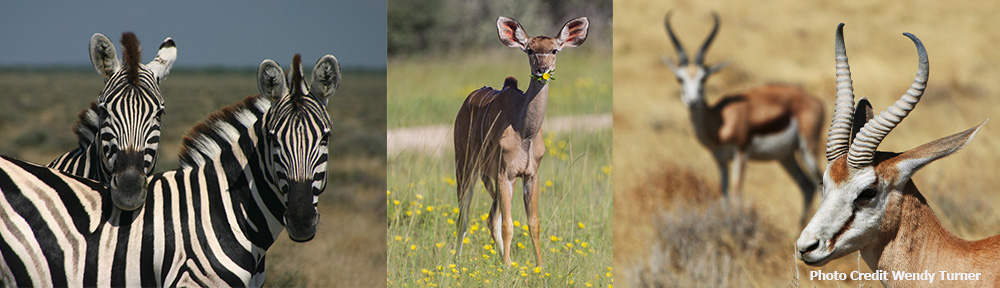
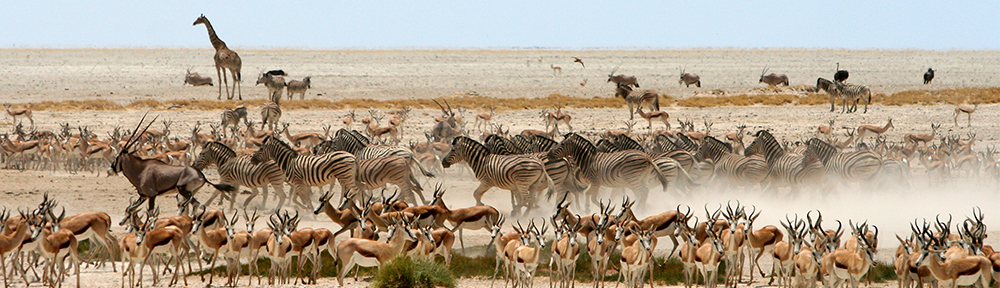
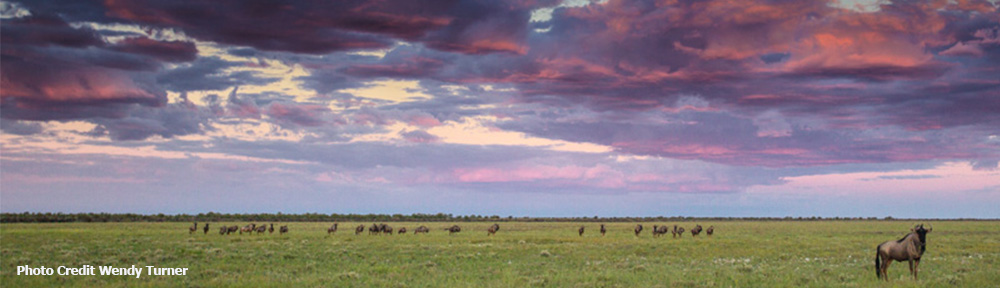
Anthrax is a globally distributed disease of wildlife, livestock, and humans. Successful prediction of and response to outbreaks of anthrax is limited by a lack of understanding of the geographic differences in the ecology of the pathogen as well as the pattern of disease outbreaks. This project investigates the roles of host, pathogen, and environment to understand how the pathogen-host interaction evolves and contributes to the differences in anthrax occurrence between two study areas: Etosha National Park, Namibia, and Kruger National Park, South Africa. The project builds on detailed records of disease and population dynamics in each park as well as archived pathogen samples and new data collection and analyses and mathematical modeling to understand these different dynamics. We are linking variability in B. anthracis genomes to phenotype (i.e., pathogen survival in the environment, virulence to hosts, and transmission across host and geographic range). We are identifying host immunological signatures of infection and genes under pathogen-mediated selection in four species: plains zebra (Equus quagga), greater kudu (Tragelaphus strepsiceros), blue wildebeest (Connochaetes taurinus) and common impala (Aepyceros melampus). We are building landscape-level models of epidemiology and population dynamics incorporating host movement, transmission routes, pathogen virulence, and host resistance. Finally, we will develop models predicting anthrax transmission dynamics across ecosystems. In a broader sense, this research will facilitate the development of predictive tools to better manage public health and related policies for complex, multi-host zoonotic diseases such as anthrax.
Investigating causes and impacts of pneumonia on white-tailed deer
Investigators: Pauline L. Kamath, University of Maine, Orono; Wendy Turner, USGS, Wisconsin Cooperative Wildlife Research Unit; Marie Pinkerton, University of Wisconsin–Madison; Daniel Walsh, USGS, Montana Cooperative Wildlife Research Unit; Daniel Storm, Wisconsin DNR
Funding: Wisconsin DNR
Expected Completion: August 31, 2024
Within the United States, deer represent an important source of food and revenue, while also hosting pathogens that put healthy deer populations at risk and jeopardize human health and food security. Developing tools for disease surveillance in important recreational and sustenance species like deer will thus be paramount for detecting and responding to outbreaks and spillover events. In Wisconsin, the Department of Natural Resources has been monitoring the white-tailed deer (Odocoileus virginianus) population for chronic wasting disease (CWD) since 1999. Recently, surveillance efforts have identified additional mortalities in deer attributed to pneumonia. Interestingly, such mortalities have been observed in deer both with and without CWD, suggesting the presence of a yet unknown etiologic agent in this population. This study will compare the respiratory tract microbial communities of deer that died with pneumonia to those that died without pneumonia, and to hunter-harvested deer. Preliminary results show high prevalence (9.8-41.4% of BLAST-ed reads) of the Gram-negative bacteria Fusobacterium necrophorum in pneumonia-positive individuals, and a lack thereof in control individuals. While F. necrophorum has been previously identified as a cause of mortality in deer, it remains unclear whether it is the direct cause of pneumonia-related mortality in this case or an opportunistic colonizer of already diseased deer. This project aims to confirm the etiologic agent(s) responsible, characterize their distribution, identify risk-factors underlying host mortality, and understand the association with CWD. Ultimately, this information will help inform management strategies and developing disease surveillance systems for the Wisconsin deer population.
Influence of chronic wasting disease and predators on deer survival and population dynamics in southwest Wisconsin
Investigator: Wendy Turner, USGS, Wisconsin Cooperative Wildlife Research Unit; Alison Ketz, University of Wisconsin–Madison
Funding: Wisconsin Department of Natural Resources
Expected Completion: June 30, 2024
Chronic wasting disease (CWD) was discovered in Wisconsin white-tailed deer harvested in fall 2001. Since then, CWD prevalence has increased in all sex and age classes and increased in spatial extent. For example, in the highest-prevalence areas, prevalence exceeds 30 percent in adult males and 15 percent in adult females. It is uncertain what impact CWD is currently having on deer populations and what impact it may have as prevalence increases. Studies in the western USA have found that CWD negatively impacts elk and mule deer survival and population size, but no field research has documented the impact of CWD on white-tailed deer survival or population growth in Wisconsin. Further, there is not any ongoing work in the Midwest that specifically addresses the direct impact of CWD on deer survival. Additionally, there is evidence for a genetic basis in variation in CWD-susceptibility, but it is not known if survival differs between deer of differing genetic makeup. Not knowing the contribution of CWD, predators, habitat change, or other potential factors makes it difficult to develop an effective management strategy. A better understanding of factors affecting survival and population growth would enable more informed deer population management, by facilitating antlerless quota adjustment in the face of changes in mortality rates from other sources. Studying the impact of CWD, or of any one source of mortality, on survival and population growth is difficult. The impact depends in part on competing sources of mortality and reproduction rates, all of which need to be quantified. A robust and sophisticated modeling framework is needed to understand spatiotemporal patterns in CWD prevalence and deer demographic rates. The goal of this research is to provide technical information, scientific guidance, and related assistance to WDNR scientists and policy makers regarding deer population dynamics in the CWD-endemic region of southwestern Wisconsin. This project is being done in collaboration with Daniel Storm (Wisconsin Department of Natural Resources) and Dan Walsh (US Geological Survey).
Movement of deer in southwest Wisconsin and its role in CWD spread
Investigator: Wendy Turner, USGS, Wisconsin Cooperative Wildlife Research Unit
Funding: Wisconsin Department of Natural Resources
Expected Completion: June 30, 2024
This project focuses on the spatiotemporal context of how landscape heterogeneity, seasonality, and deer movement behavior (individually and in aggregate) affect chronic wasting disease (CWD) spread. The goal is to better understand the mechanisms of CWD spread and the causes of the observed directional (rather than uniform) CWD diffusion and growth across the landscape. The project will investigate the impact of CWD infection on deer movement behavior, and the reverse, the impact of deer movement behaviors and contacts on CWD spread. Understanding the times and places where deer are most likely to congregate and the weather, landscape, phenological and demographic factors that alter movement patterns and direct and indirect contact rates will help predict CWD dynamics and may inform management activities. Further, better understanding how sex- and age-specific movements and habitat selection vary according to landscape composition and configuration, weather, plant and crop phenology is of interest to ecologists and the general public and may help managers understand variation in deer population dynamics.
Looking backwards to know where to go: leveraging historical data to guide CWD management
Investigator: Wendy Turner, USGS, Wisconsin Cooperative Wildlife Research Unit; Daniel Walsh, USGS, Montana Cooperative Wildlife Research Unit; Daniel Storm, Wisconsin DNR
Funding: USGS Emerging Diseases
Expected Completion: August 31, 2023
Management of chronic wasting disease (CWD) is one of the most significant challenges facing many wildlife agencies in North America. One of the difficulties in managing this disease is that CWD-affected species range across jurisdictional boundaries; yet currently there is little communication or coordination among management agencies regarding CWD response. Unified efforts to evaluate the effectiveness of the suite of management actions that agencies have applied for disease control are lacking. This project is aimed at filling these gaps by leveraging historical information maintained by state agencies to evaluate impacts of CWD management activities on population and disease dynamics and establishing a framework that will improve coordination and information exchange. This framework will serve as the basis for the creation of an adaptive management strategy for CWD mitigation among Midwestern, state and federal, wildlife management agencies. The objectives of this project are to investigate the impacts of deer harvest regulations on the realized harvest within and between states in the Midwest, tie the analytical results to CWD dynamics to determine the harvest regulations most likely to have the desired outcome for managing CWD, and plan an adaptive management workshop for participating state agencies to effectively use the results of the modeling effort regarding harvest strategies.
CWD-prion accumulation dynamics at bait sites for free-ranging deer
Investigators: Wendy Turner, USGS, Wisconsin Cooperative Wildlife Research Unit; Stuart Lichtenberg, University of Wisconsin–Madison
Funding: USDA APHIS Wildlife Services, Wild Cervid Chronic Wasting Disease Management and Response Activities
Expected Completion: August 31, 2023
Attracting deer with food or minerals to specific locations for the purpose of sport hunting, observation, or tagging is a common practice. CWD-infected deer shed prions into the environment, raising the possibility that bait sites in CWD zones may become “hot spots” of prion deposition. Regulation of deer baiting is inconsistent across jurisdictions, and no empirical data have been reported regarding the impact of deer baiting on prion deposition onto the landscape. The project directly addresses this critical knowledge gap and provides tangible data that can be used to inform regulatory decision making. This project quantifies the extent of prion deposition at former and active bait sites within CWD zones in southern Wisconsin and Tennessee. This will provide insight into environmental transmission risk and for future decisions regarding management regulations and recommendations for deer baiting.